


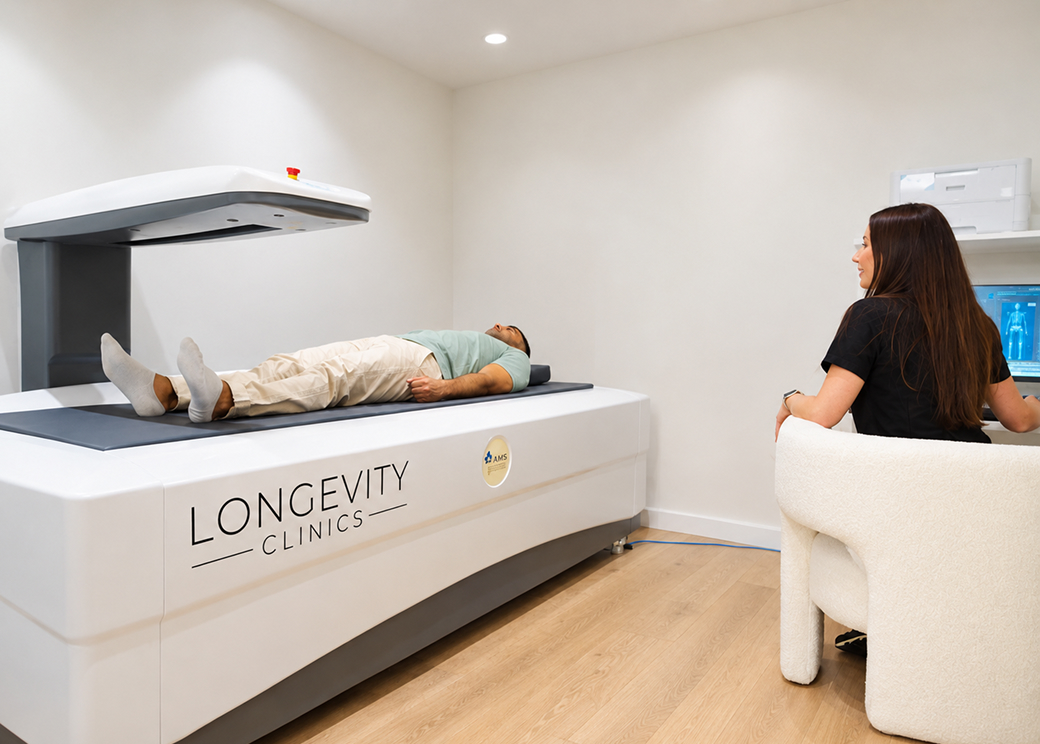
A DEXA scan can provide objective information about your total body composition – including bone density, muscle mass and fat mass. If you are considering a DEXA scan in Sydney, understanding what the assessment measures and how the results are interpreted can help you decide whether it may be appropriate for your circumstances.
Unlike a general health check, a DEXA or DXA assessment focuses on specific measurements. The information provided will depend on the purpose of the scan and the type of assessment performed.
What Is a DEXA Scan?
DEXA stands for dual-energy X-ray absorptiometry. It is an imaging assessment that uses low-dose X-rays to measure bone mineral density.
DEXA is commonly associated with bone health and can also provide information about body composition, including fat mass and lean mass.
The purpose of the assessment is important when considering the results. A bone-focused DEXA scan and a body composition assessment may answer different questions, so it is useful to understand what the scan is intended to measure before interpreting the results.
Results should also be considered alongside relevant information such as age, medical history, medications, and previous fractures or injuries.
What Can a DEXA Scan Tell You?
Depending on the type and purpose of the assessment, a DEXA scan may provide information about:
- Bone mineral density
- Bone mineral content
- Bone health
- Fat mass
- Lean mass
- Body composition
For bone health, measurements are taken at selected areas of the skeleton. A body composition assessment can provide information about the distribution of fat and lean tissue.
These measurements can provide useful objective information, but they do not provide a complete assessment of fitness, nutrition, metabolic health, or overall wellbeing.
The results are most useful when considered in the context of why the assessment was performed and the individual’s broader health information.
Understanding Bone Mineral Density
Bone mineral density refers to the amount of mineral contained within a specific area of bone. It is one of the measurements used when assessing bone health.
A bone mineral density scan may be considered when there is a clinical reason to assess bone density. Factors such as age, medical history, previous fractures, falls, medications, and other circumstances may be relevant when deciding whether testing is appropriate.
A lower bone mineral density measurement may provide important information about bone health, but it does not tell the whole story. Other factors can also contribute to an individual’s overall fracture risk.
For this reason, bone density results should be interpreted alongside relevant clinical information rather than in isolation.
What Is a Bone Density Test Used For?
A bone density test may be used to measure bone mineral density when there is an appropriate reason for assessment.
Testing may be considered in some circumstances based on factors such as age, medical history, previous fractures, or other bone-health risk factors. However, a DEXA scan is not necessarily appropriate for everyone.
There is also no single testing schedule that applies to every person. A healthcare professional can consider the reason for testing, previous results, and relevant risk factors when advising whether a bone-density assessment may be appropriate.
Can a DEXA Scan Assess Body Composition?
Some DEXA assessments can provide information about body composition as well as bone measurements.
Body composition describes the relative amounts of different tissues in the body. Depending on the assessment, DEXA can provide measurements of fat mass and lean mass, which includes muscle and other non-fat tissue.
This can provide information that is different from body weight or BMI alone. For example, two people with a similar body weight may have different proportions of fat and lean tissue.
Body composition measurements should still be interpreted appropriately. A DEXA scan does not, by itself, determine whether someone is fit, nutritionally healthy, or metabolically healthy.
What Happens During a DEXA Bone Density Scan?
A DEXA scan is a non-invasive imaging assessment. The person generally lies still on a scanning table while the equipment takes measurements of selected areas.
The procedure is designed to be straightforward, although the exact process can vary depending on the type and purpose of the assessment.
Preparation requirements may also vary between services. Follow the instructions provided by the healthcare professional or imaging provider performing the assessment.
If you have questions about preparation, pregnancy, or another circumstance that may be relevant to imaging, discuss this with the appropriate healthcare professional before your appointment.
How Should DEXA Results Be Interpreted?
A DEXA scan provides measurements, but understanding what those measurements mean requires context.
For example, bone density results need to be considered alongside relevant clinical factors rather than being used on their own to determine a person’s overall bone health or fracture risk.
Similarly, body composition measurements may provide useful information about fat and lean mass, but a single assessment does not provide a complete picture of fitness, nutrition or metabolic health.
If you have previous DEXA results, comparing assessments may sometimes be useful. However, changes between scans need to be interpreted appropriately, including consideration of the timing and circumstances of each assessment.
A healthcare professional can explain your results in the context of your individual circumstances and advise whether any further assessment may be appropriate.
Is a DEXA Scan Suitable for Everyone?
No. A DEXA assessment is not automatically appropriate for every person.
Whether testing may be useful depends on factors such as:
- The purpose of the assessment
- Medical history
- Relevant risk factors
- Previous fractures or injuries
- The type of information being sought
For one person, a bone-density assessment may be clinically relevant. For another, there may be little reason to perform the test.
If you are unsure whether a DEXA scan is appropriate for you, discuss your circumstances with a qualified healthcare professional. They can consider your relevant history and explain whether this type of assessment may be suitable.
What Should You Consider Before a DEXA Scan?
If you are considering a DEXA scan in Australia, it can be useful to clarify what you want the assessment to tell you.
Consider whether you are seeking information about:
- Bone mineral density
- Bone health
- Body composition
- Fat mass and lean mass
- Changes between previous assessments
It is also worth asking how the results will be interpreted and whether the assessment is appropriate for your circumstances.
Understanding the purpose of the scan can help ensure that the information obtained is considered in the right context rather than treated as a standalone measure of overall health.
FAQs
What does a DEXA scan measure?
Depending on the type and purpose of the assessment, a DEXA scan may measure bone mineral density, bone mineral content, and aspects of body composition, including fat mass and lean mass.
Is a DEXA scan the same as a bone density test?
DEXA is a commonly used method for measuring bone mineral density, so the terms may be used interchangeably when referring to a bone-focused assessment. However, DEXA technology can also be used for body composition assessment.
What does bone mineral density mean?
Bone mineral density refers to the amount of mineral in a specific area of bone. It is one measurement used when assessing bone health and should be considered alongside other relevant clinical information.
Can DEXA measure body composition?
Yes. Depending on the type and purpose of the assessment, DEXA can provide measurements relating to fat mass and lean mass as well as bone measurements.
Is a DEXA scan safe?
DEXA uses low-dose X-rays. Whether an imaging assessment is appropriate depends on the individual’s circumstances and the purpose of testing. Discuss any concerns, including pregnancy or possible pregnancy, with the relevant healthcare professional before the assessment.
Who can advise whether a DEXA assessment is appropriate?
A qualified healthcare professional can consider your medical history, relevant risk factors, and the purpose of testing before advising whether a DEXA assessment may be appropriate.


 Woollahra Clinic

 175 Edgecliff Road Woollahra NSW 2025

 Get Directions